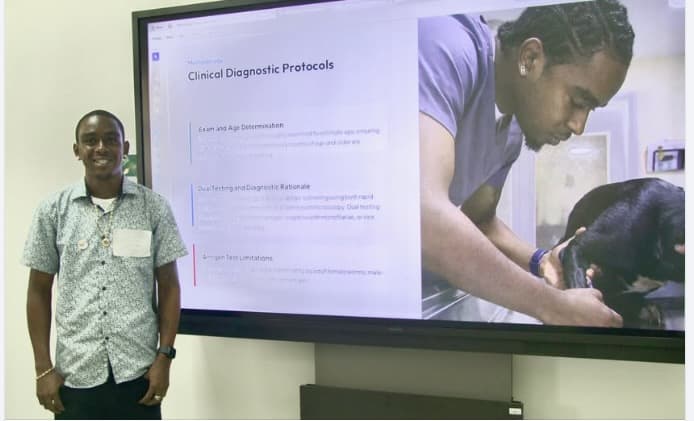
José Henry, HSSTT vet assistant, wins honor at UVI science symposium.
José Henry is a vet assistant at the Humane Society of St. Thomas (HSSTT) and an undergraduate at the University of the Virgin Islands (UVI) pursuing a bachelor’s degree in biology. He’s used his time at the HSSTT to better understand a common, and potentially deadly parasitic infection prevalent in the USVI – heartworm disease.
José recently participated in the 27th Annual UVI Undergraduate Research Symposium, where he was named the winner for the Symposium session in Medicine and Chemistry on his research project: Determining Heartworm Prevalence in Shelter Intakes and Assessing Public Knowledge as a Driving Factor in St. Thomas* (abstract below).
"What an outstanding young man with an incredible future ahead of him. Elated that we are a small part of his journey." -Randy Knight, President of the HSSTT Board of Directors
Working with HSSTT veterinarian and his mentor, Dr. Tracy Williams, José conducted diagnostic screenings on shelter dogs and distributed community surveys to analyze regional heartworm rates and public awareness.
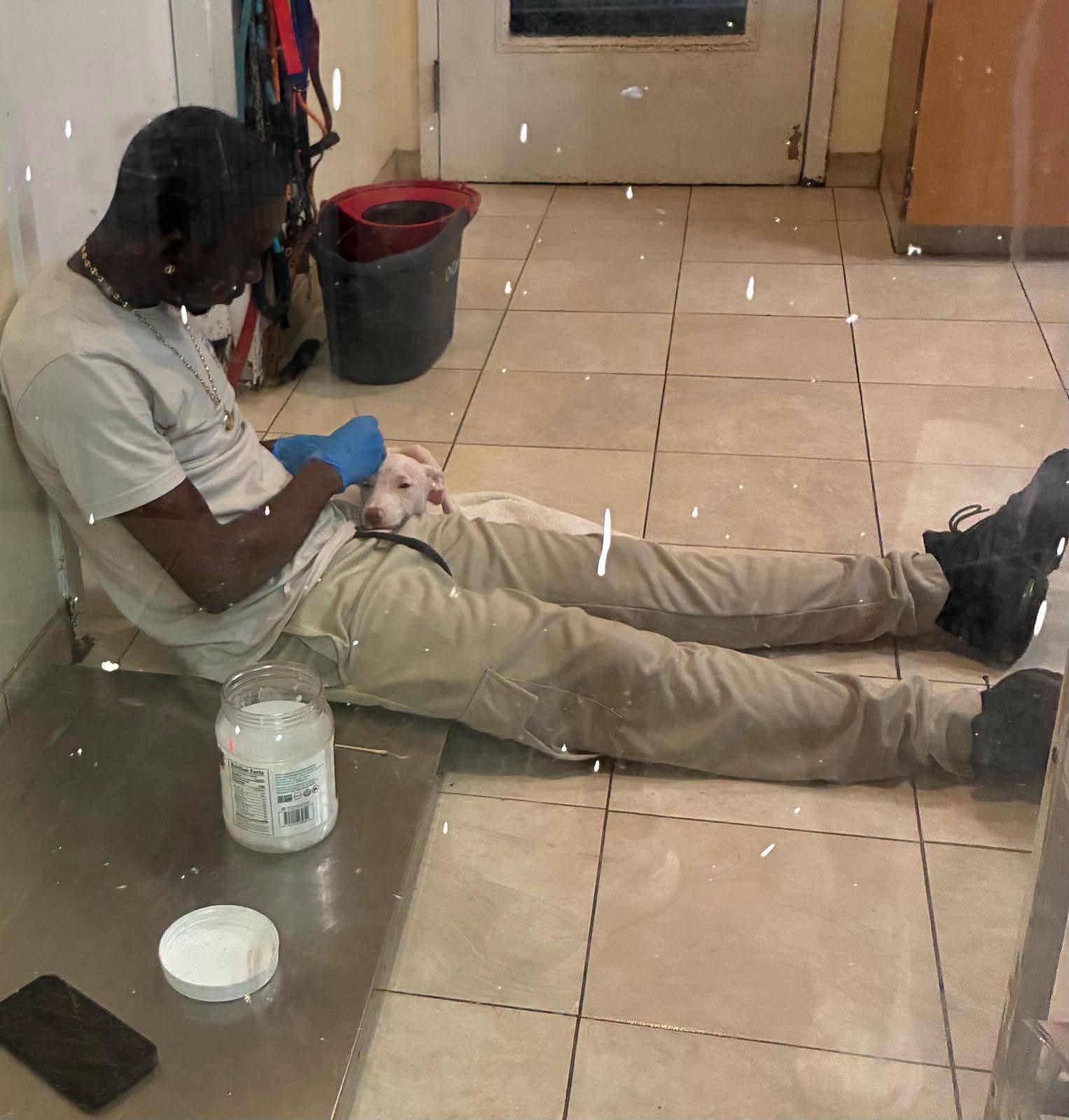
José has been working as a vet assistant at the HSSTT since April 2025. Not only does he show compassion and kindness to the animals in your care, but he is also using his education, curiosity, and dedication to help make a difference for animals across our island. We couldn’t be happier for his achievement!
Congratulations José!
Abstract
Determining Heartworm Prevalence in Shelter Intakes and Assessing Public Knowledge as a Driving Factor in St. Thomas
Heartworm disease, caused by the parasitic nematode Dirofilaria immitis, is a major mosquito borne threat to domestic animals in tropical regions like St. Thomas. For my study, I evaluated heartworm prevalence among shelter intake dogs while looking at whether public knowledge gaps contribute to sustained transmission across the island. Clinical testing at the shelter reveals a consistently high prevalence of heartworm disease, and that gaps in public knowledge could be part of the issue. Alongside Dr. Williams and the other medical staff during shelter shifts, incoming dogs aged six months and older were examined for diagnostic testing. Across the 94 heartworm tests conducted at the shelter in 2026 so far, 51.1% (48/94) returned positive results for adult heartworm antigens, with 54.2% (26/48) of those positive tests harboring active circulating microfilariae on wet mount examination. Historical records confirmed consistently elevated infection rates across prior years. The survey revealed major gaps in general disease knowledge that likely contribute to these sustained rates: 42% of respondents did not know mosquitoes spread heartworms, 37% admitted to administering preventative care rarely or being unsure of the schedule, and 55% were unaware of feline susceptibility. The results obtained shows that high shelter prevalence is closely linked to widespread community misconceptions, highlighting the need for comprehensive public health education.
Keep reading
More stories from the shelter.
 Oct 20, 2026
Meet Fiona - Dog of the Week!
Meet Fiona - our Humane Society of St. Thomas Dog of the Week!Read story Oct 17, 2026
2027 Calendar Contest Winners!
Results from the Humane Society of St. Thomas 7th Annual Pets in America's Paradise Calendar Contest!Read story Oct 5, 2026
Treasure - Dog of the Week
Meet Treasure - our Humane Society of St. Thomas Dog of the Week!Read story